Dental Health
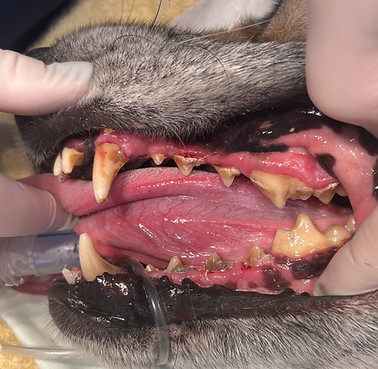
Before

After

Signs of Dental Disease in Dogs
Dogs are masters at hiding discomfort, so it’s important to watch for these early warning signs of dental problems:
-
Bad Breath (Halitosis): Persistent odor often signals plaque or gingivitis.
-
Red or Swollen Gums: May indicate inflammation or infection.
-
Visible Tartar: Yellow or brown buildup on teeth can lead to gum disease.
-
Changes in Eating Habits: Eating slowly, preferring soft food, or dropping kibble may mean chewing is painful.
-
Loose or Missing Teeth: A sign of advanced dental disease.
-
Pawing at the Mouth: Indicates discomfort or irritation.
-
Swelling or Bleeding: Around the mouth or gums is a serious concern.
Regular dental cleanings and checkups can prevent these problems and protect your dog’s long-term health.

Feline Dental Health
Cats are especially prone to dental issues, and often show very subtle signs of pain. Poor oral health can cause tooth loss, infection, and systemic illness affecting major organs.
One of the most serious feline conditions is Feline Stomatitis, a painful and chronic inflammation of the mouth caused by an overactive immune response to dental plaque and bacteria.
Symptoms of Feline Stomatitis include:
-
Bad breath
-
Red, swollen, or ulcerated gums
-
Excessive drooling
-
Difficulty eating or weight loss
-
Decreased grooming
Treatment often involves surgical removal of most or all teeth to eliminate the source of inflammation and restore comfort. Our team provides gentle and compassionate care to help manage these complex cases and improve quality of life.

Or Approach to Dental Care
At Carberry Vet Clinic, we take dental health seriously because we’ve seen firsthand how much it improves pets’ lives. Our dental services include:
-
Full oral exams and dental charting
-
Professional cleanings under anesthesia
-
Dental X-rays to assess below the gumline
-
Extractions when necessary
-
Personalized home care guidance
Healthy teeth mean a happier, healthier pet, and we’re here to help every step of the way!